Effective car dealer near me SEO is not about repeating “near me” across every dealership page.
It is about giving nearby shoppers—and search engines—reliable answers to four questions: Where is your store? Which communities can reasonably buy from you? What vehicles and financing paths do you actually offer? And what can a shopper do next? For independent retail and Buy Here Pay Here (BHPH) dealers, those answers should connect local website content to real inventory, accurate business information, and a working lead path.
Imagine an independent dealership in one town serving buyers from three neighboring communities. Its physical address is real, but its website barely mentions those markets. A second dealer publishes dozens of identical city pages with swapped place names. Neither approach is ideal. The first misses opportunities to explain genuine local relevance; the second risks publishing unhelpful pages. A stronger strategy builds useful location-specific content without pretending the dealership has storefronts where it does not.
What Does “Near Me” Mean for a Car Dealership?
“Used car dealer near me” often signals that a buyer wants a reachable dealership, current vehicles, convenient hours, and clear directions. It is local and usually commercial intent—not merely a request for a geographic keyword. Searches such as “BHPH near me,” “used trucks near [town],” or “used SUV dealer open Saturday” add specific requirements. The landing page should make it easy to satisfy the underlying need.
Google says local results are mainly influenced by relevance, distance, and prominence. Relevance reflects how well the business matches a search; distance concerns the searcher’s location; prominence reflects how established or well known the business appears. Its official local ranking guidance does not promise placement simply because a website includes a town name. Organic website visibility and the Google Maps/local pack also involve different interfaces and signals. A good plan supports both without claiming that one page controls either result.
1. Make the Homepage State the Dealership’s Real Identity
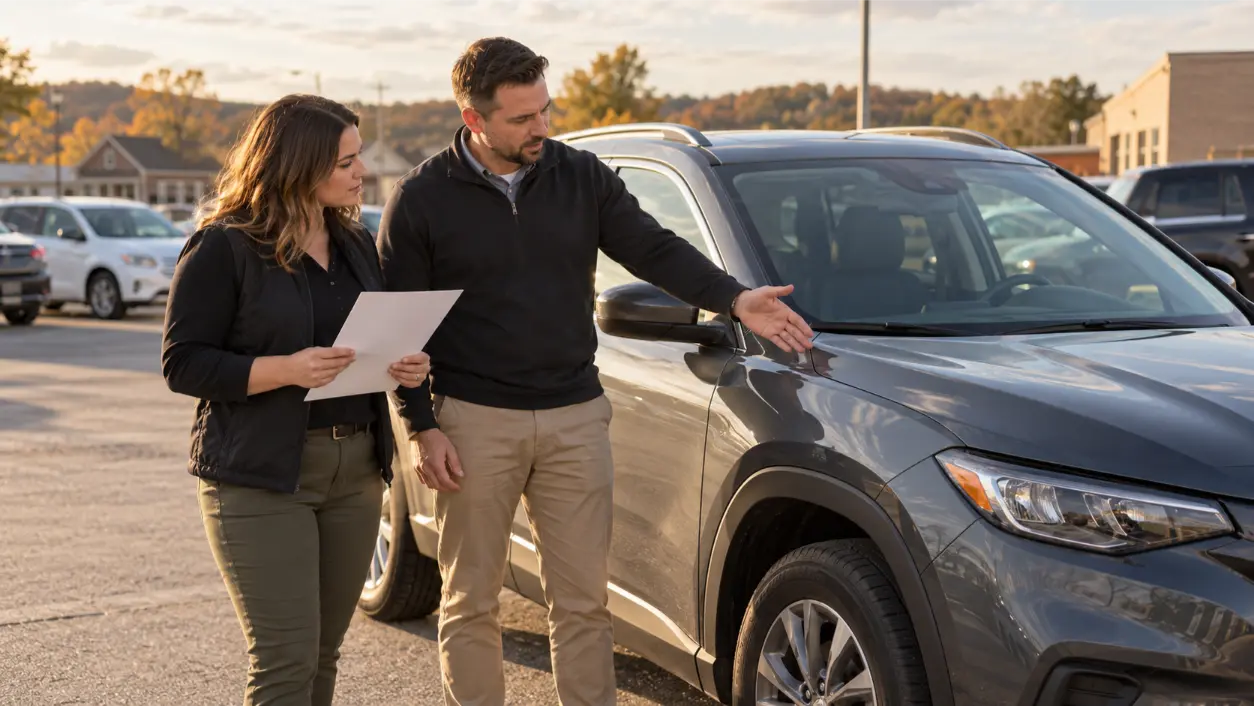
The homepage should quickly establish the dealership’s actual name, location, principal offer, and useful next steps. A visitor arriving from “used cars near me” should not have to scroll through generic slogans to learn where the lot is or whether it sells used vehicles. Put a clear inventory link, phone or contact option, and directions where mobile shoppers can find them.
2. Treat the Actual Dealership Location Page as a Core Asset
A legitimate location page should tell shoppers how to visit, contact, and evaluate the actual storefront. Include the complete address, current hours, directions or a useful map link, parking or arrival notes when relevant, and links to the store’s inventory and contact options. If the dealer has multiple genuinely staffed retail locations, each may deserve a distinct location page with its own accurate details and inventory context.
Do not create a fake address, virtual-office listing, or duplicate Google Business Profile for a neighboring town without a real eligible business location. Google’s Business Profile guidelines require accurate business representation and distinguish staffed storefronts from eligible service-area businesses. Serving customers who drive from another town is not the same as operating a second dealership there.
3. Build Service-Area Pages Only When They Help Real Buyers
Service-area content can explain why shoppers from nearby communities choose to travel to the dealership. But a page is useful only if it provides more than the city name. It might cover a realistic route to the store, the kinds of vehicles relevant to a community, how to confirm availability before visiting, and what the dealership’s actual financing process looks like for any eligible customer.
For example, a page about serving shoppers in a neighboring town could explain that the dealership is physically located in its home city, include directions from the neighboring area, link to currently available vehicles, and answer a question shoppers in that market commonly ask. If there is nothing distinctive to say, a single well-written “Areas We Serve” section may be better than a separate page.
A Useful Service-Area Page Versus a Doorway Page
Useful: A page says the dealership is located in its actual home city and helps shoppers in a nearby town compare current vehicles, confirm availability, and get driving directions. It offers details a buyer can act on rather than presenting a second imaginary store.
Weak: Twenty pages with identical paragraphs, the same inventory and calls to action, and only the city name changed. Google’s spam policies warn against doorway abuse, including multiple similar city pages that simply funnel visitors to another destination. They also address scaled, low-value content. Publishing volume is not a substitute for real local usefulness.
4. Keep Google Business Profile and Website Facts Consistent
Review the Business Profile for the actual dealership: name, primary category, address, phone, business hours, website link, photos, and other applicable information. Update holidays and special hours when appropriate. The information on the dealership’s contact and location pages should not contradict what shoppers see on Google Maps.
Business Profile consistency helps customers avoid wrong turns and failed calls. It also provides complete information for Google’s local systems, but no agency or website vendor can guarantee a specific local pack position. Ask for genuine customer reviews without offering prohibited incentives or pressuring shoppers, and respond professionally where appropriate. Never use a keyword-stuffed business name that differs from the name actually used in the world.
Service-area settings do not turn neighboring cities into physical dealer locations. Under Google’s rules, the correct profile arrangement depends on the real business model and location eligibility. For a conventional storefront auto lot, represent the real storefront rather than stretching a map or creating extra profiles to imply broader physical presence.
5. Make Inventory and Vehicle Detail Pages Work for Local Intent
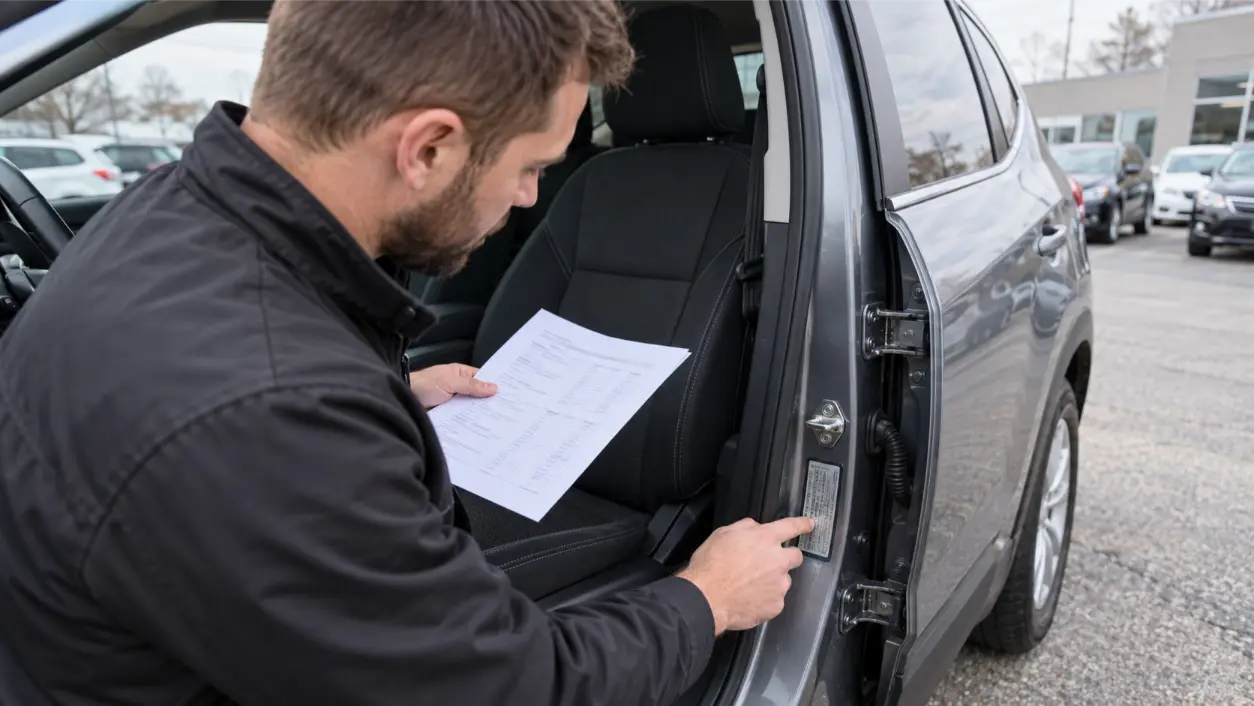
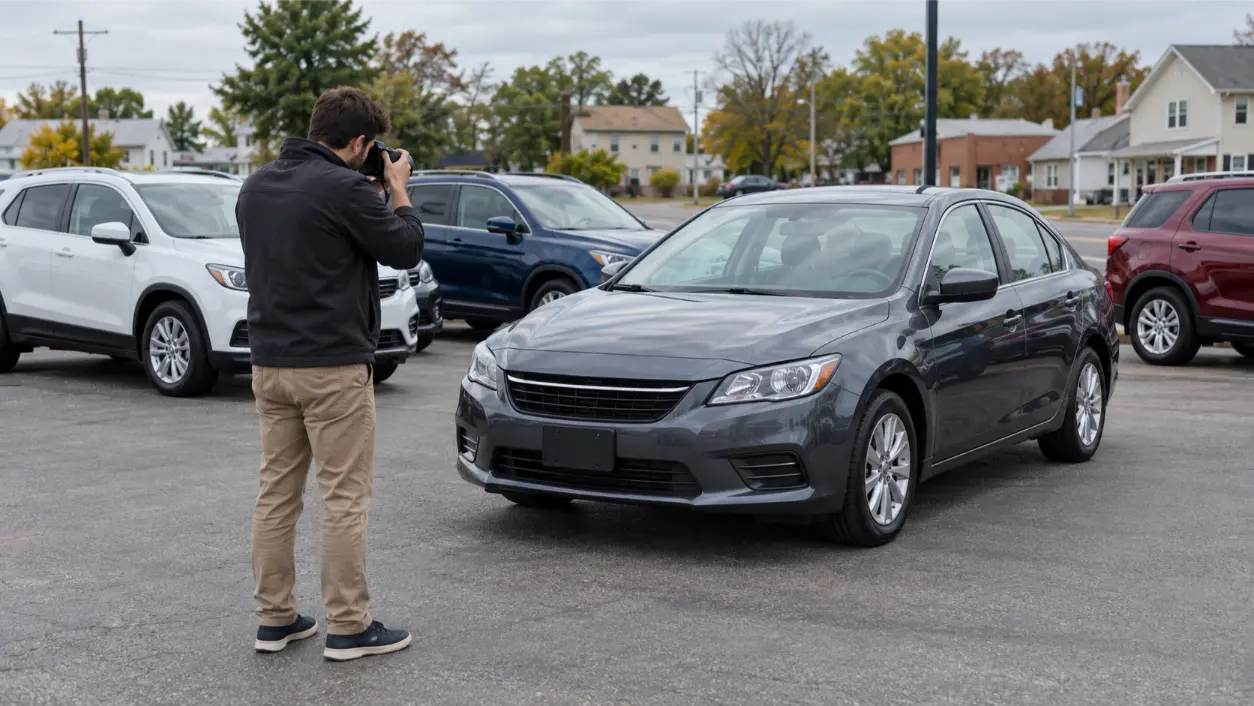
Local search often ends with a practical vehicle question. Someone searching “used trucks near me” wants to see actual trucks, not an essay repeating “best truck dealer.” Inventory categories should be navigable, and vehicle detail pages (VDPs) should present accurate model, year, mileage, price or clearly stated pricing status, photographs, availability, and an obvious next action.
Vehicle pages also serve as natural destinations from educational articles. A guide about choosing a first work truck can lead to available trucks; a financing-document FAQ can lead to the verified financing process. The link should solve the shopper’s next task rather than simply pushing every visitor to the homepage.
6. Explain Financing and BHPH Without Broad Promises
For a BHPH store, local buyers may search for financing alternatives as often as vehicle models. A dedicated financing page should explain the program the dealership actually operates, what the application or inquiry does, which documents the store normally requests, and which details depend on review. It should not promise that every applicant will qualify or that terms are identical for all buyers.
Local service-area pages can link to one accurate financing hub instead of repeating the same policy claims across every town. Consider separate explanatory content for “How does BHPH work?”, “What should I bring?”, and “Can I browse inventory before applying?” when those are real customer questions. Avoid stating credit-reporting practices, soft-pull guarantees, rates, or legal disclosures unless confirmed for the dealership and its specific workflow.
7. Write Titles, Headings, and Internal Links for People
Google’s SEO Starter Guide recommends clear, unique titles, useful original content, logical organization, and descriptive links. A local page title such as “Used Cars for Shoppers in [Nearby Town] | [Dealer Name]” may be appropriate when the page truly serves that audience. The article text should then explain the real location and offer rather than disguising a distant store as local.
Use one clear page heading, descriptive sections, natural mentions of a town where relevant, and a direct call to action. Avoid repeated keyword strings like “car dealer near me near [Town] used cars near me.” The phrase “near me” usually describes the shopper’s search behavior; it rarely needs to be forced into consumer-facing sales copy.
Make internal links reflect the buyer’s journey: a service-area page to directions and inventory; an inventory page to a VDP; a financing question to the financing page; a VDP to a vehicle inquiry. Descriptive anchors help visitors understand where each link leads. Turbo Dealer’s dealer search-intent guide provides a related framework for matching informational, local, commercial, and transactional pages to what a shopper wants.
8. Keep the Mobile Lead Path Short and Trustworthy
Many local searches are made when a buyer is comparing options quickly. On a phone, the dealership’s name, location, inventory, phone number, and main action should be immediately understandable. Buttons and forms should work without zooming or confusing navigation. Show the next step near the relevant information rather than hiding it below long, repetitive city copy.
A good lead path can be simple: a shopper opens a local page, sees the real address and offer, browses vehicles, opens a VDP, and asks about availability. Another may read a financing explainer and choose to start a verified form. Measure whether inquiries reach the CRM and whether calls route correctly. More traffic is not the business goal if visitors cannot contact the store or find the vehicle they wanted.
9. Use Technical Signals Carefully, Then Measure Actual Outcomes
Make important pages crawlable and internally linked, use descriptive canonical URLs, and check mobile performance. Where appropriate, accurate LocalBusiness structured data can clarify an eligible store’s address, hours, and other facts. Markup must match visible information and does not guarantee special search appearances.
Measure the pages rather than assuming an increase in rankings automatically means an increase in sales. In Google Search Console’s Performance report, review local-intent queries, impressions, clicks, click-through rate, and the pages receiving them. Pair this with analytics, call tracking, form delivery, and dealership CRM outcomes. Compare meaningful periods, account for inventory changes, and look for patterns instead of promising instant results.
One useful audit question is: Are the nearby-town pages generating inquiries from shoppers who can realistically visit the store, or are they collecting irrelevant search visits? If a page attracts views but no helpful actions, revisit its message and next step. If several pages target the same query with nearly identical content, consolidate or improve them rather than automatically creating more.
A 10-Point Near-Me SEO Content Checklist for Dealers
- Confirm the real location. Verify the dealership name, address, phone, hours, and storefront eligibility.
- Audit the homepage. Make location, inventory, financing paths, and calls to action easy to understand.
- Review the main location page. Add accurate directions, visit details, and links to vehicles.
- Map actual nearby markets. Identify communities customers genuinely travel from; do not imply new branches.
- Evaluate each city page. Keep it only if it offers useful, distinctive facts or buyer assistance.
- Check Business Profile information. Align address, phone, hours, photos, and the main website destination.
- Connect inventory. Link local content to current categories and accurate VDPs.
- Check financing claims. Describe real programs and conditional eligibility without guarantees.
- Test mobile calls and forms. Confirm inquiries reach the right staff or CRM.
- Measure and maintain. Review Search Console, calls, leads, content changes, and real sales feedback.
Frequently Asked Questions
Should every nearby town have its own dealership SEO page?
No. Publish a city page when it provides distinctive, useful information for shoppers in that town. If all pages would be the same except for the place name, one clear service-area overview is often a better choice.
Do I need to put “near me” in the website title?
Not usually. Use a clear, unique title that identifies the actual dealership, the inventory or service offered, and a real geographic market when useful. A forced “near me” phrase does not make a distant or irrelevant page locally relevant.
Can a dealer rank in a city where it has no lot?
Organic pages may appear for relevant searches outside the dealer’s home city, but there is no guarantee. Google local results account for distance, so website copy cannot remove the physical-location factor. Do not claim a storefront you do not have.
What matters more: Google Business Profile or location pages?
They serve complementary purposes. Business Profile helps represent an eligible local business on Google Maps and Search; useful website pages explain the store, vehicles, directions, and buyer process in depth. Both should be accurate.
Will LocalBusiness schema guarantee better near-me rankings?
No. Structured data can help Google interpret accurate business details, but it cannot guarantee ranking, rich results, customer inquiries, or sales. First make sure the underlying website information is correct.
How do BHPH dealerships handle multiple service areas?
Show the true dealership location and the communities that can reasonably visit it, then connect local content to live inventory and one accurate BHPH financing explanation. Do not create imaginary branches, identical town pages, or unsupported approval promises.
Build a Local Website That Helps Shoppers Take the Next Step
Local SEO works best when a dealership’s website makes its real-world business easy to understand and act on. Turbo Dealer Websites focuses on independent retail and BHPH dealership websites with SEO, inventory presentation, Smart Forms, and lead-oriented workflows. Review the current website and lead packages or contact Turbo Dealer for a lead analysis to discuss a location-page and service-area strategy grounded in your real dealership. Search visibility and lead results depend on competition, location, website condition, execution, and other factors; rankings or sales are not guaranteed.
Disclaimer: This article provides general digital-marketing, search-engine, and dealership-compliance information, not legal, financial, or guaranteed SEO-performance advice. Search features and platform policies may change, and dealership advertising, financing claims, business listings, consumer data practices, and vehicle disclosures must match current law and actual operations. Verify current Google guidance and obtain qualified advice where necessary.
RELATED LINK: Google Business Profile Help — Tips to Improve Your Local Ranking on Google